Pride Month is Over and We're Still Here

This isn’t the second blog post I planned on writing. Pride Month always brings up a strange mix of emotions for me, and I decided it was important to honor them. I’m writing this for myself, to help process and release the past, but also for the readers in hopes that it might inspire reflection and, even better, action. As a heads up, this article contains a few stories about assault from my personal life that may be triggering for some readers.
It was May 13, 2023, around 10pm when a friend and I were walking from my apartment to a gay bar in San Francisco’s SoMa neighborhood. We had only just left my apartment when we noticed a car starting to follow behind us. Two guys jumped out of the car and started mocking and harassing us while the car continued to slowly follow. We kept walking, largely trying to ignore them while they continued to yell at us from behind. Right before we got to a busier intersection on Folsom Street, one of the men open palm smacked me across the right side of my head and called me a f*gg*t before they jumped back in their car and sped off. My friend and I tried to process what had just happened to us while we continued to walk to the bar. Neither of us were seriously injured and we thought it was best not to let the incident ruin our night. We got to the bar, and after ten minutes of sitting in the corner in silence, pretending that I could still enjoy my night, I left my friend and walked back home with my ears still ringing from the impact.

The men didn’t try to steal our wallets or phones, and I have no idea what they wanted with us other than to degrade and humiliate us. Mission accomplished because for the next two days I found myself unable to get out of bed, unable to work, and unable to text or call any friends or family to try to explain what happened. I took a steady stream of Xanax and forced myself to sleep as much as I could because anytime I was awake I was taken back to a scared little boy I had tried so hard to run away from for the past 25 years.
For the next few weeks, I was scared every time I left my apartment. I would break down crying in the most inconvenient places: in the office at work, in the grocery store, walking anywhere through the city. I felt unsafe, jittery and on edge, and like I had completely misjudged a city and a world I had just started to feel like I understood. In an instant I fell out of love with a city I had always dreamed of living in. This was San Francisco, arguably the most queer friendly city in the world. At this point in my career, I had lived all over the country and traveled all over the world, and I had never felt unsafe like this as an adult. I started to question everything about my life and the world around me.
Two years later, I was 39 years old and living in Boston when I learned about complex PTSD (posttraumatic stress disorder). At this point, I had been in therapy on and off for most of my thirties. Because I was always uprooting my life and moving to new states for my career, I was often working with new therapists, some more impactful than others. With my most recent move to Massachusetts I was fortunate to begin working with a great new therapist; someone who would fundamentally shift how I understand myself and the trajectory of my life.
In preparation for working with this therapist, I did something new and spent some time reflecting on and journaling about the different traumatic events that I experienced as a child. When I started to talk through this list with her, she told me about complex PTSD and I began to understand how it might be the culprit for the anxiety and depression that have plagued me on and off for as far back as I can remember.
In researching PTSD and complex PTSD, I learned that complex PTSD tends to occur from long-lasting (or repeated) harm, usually during childhood, and often at the hands of someone the victim knows and trusts. There are two distinct systems used to diagnose mental health conditions and (of course) each handle complex PTSD differently. The Diagnostic and Statistical Manual (DSM) which is published and regulated by the American Psychiatric Association, lumps complex PTSD under an expanded definition of PTSD. However, the International Disease Classification (ICD) which is published and regulated by the World Health Organization lists complex PTSD as its own distinct condition with its own diagnosis since 2022. (National Center for PTSD).
Some common symptoms of complex PTSD include feelings of worthlessness and difficulty managing emotions. Through working with my new therapist, I was beginning to understand that one of the main challenges at the heart of my mental health conditions was my inability to regulate my emotions. Unbeknownst to me at the time, this was something that had been straining (or straight up ruining) personal relationships and showing up in my performance reviews at work for years. This was a seismic ah-ha moment for me and I’m still a little embarrassed that it took decades for me to figure this out.
Coming back to the title of this piece and as I previously mentioned, Pride Month often brings up complicated feelings for members of the LGBTQ+ community, me included. Since it has become increasingly popular for our political leaders to use LGBTQ+ issues to divide us and keep us distracted, I thought that I would take you on a little trip down my own Trauma Lane and tell you about a scared little boy growing up in small town Michigan. But first, I want to preface this by fully acknowledging my own privilege because I don’t think that we do this enough. I am a white gay, cisgender man and as such, I have been afforded privilege and a societal grace that others in the LGBTQ+ community have not been shown, particularly the transgender community who are very literally fighting for the right to exist as I write this.
Growing up in Michigan’s Upper Peninsula was a unique experience to say the least. The “UP,” as we call it, covers nearly 29% of the state’s total land area yet only includes 3% of the state’s population spread out through largely rural areas. There are a lot of things to love about growing up in a place like this, including endless outdoor space to be a kid, hardworking and generally kind people, and a slower speed of life. On the flip side of this, however, is the extreme lack of diversity and closed-mindedness towards things and people who are different from the norm. Growing up cross-eyed and gay put me squarely in the different category.
When I was a kid, I didn’t know that I was gay. I just knew that I was different from most of the other boys I went to school with. I didn’t even know what being “gay” meant at the time. To my knowledge I had never met anyone who was gay, and there weren’t queer characters represented in pop culture like there are today. I always gravitated towards hanging out with the girls at recess and some of my favorite hobbies included wearing my grandma’s high heels and helping my mother do the laundry. I could Double Dutch jump rope better than most and I was once in the local newspaper for winning a Jump Rope for Heart contest. Totally normal behavior for a young boy in the 90s, right?
Since I spent all of elementary school with the same thirty or so kids, none of this was that big of a deal because everyone knew that it was just who I was. But older kids from the neighborhood started to notice my oddities and give me a hard time. When I was eight years old and in second grade, a kid much older than me started riding his bike around me and teasing me while I was walking to a friend’s house. I tried to ignore it, but things escalated and he grabbed me and put me on the handlebars of his bike and took off, effectively kidnapping me. I remember screaming for help because I was genuinely terrified of whatever was about to happen and that’s when he pushed me off his bike while we were moving fast enough to seriously injure myself.
I can still remember the pain as I walked roughly a half mile home, dragging my arm along the ground while screaming in agony. It turns out that I had broken my right arm in multiple places, requiring surgery and a hospital stay. Had it not been for the sheer luck that there was a visiting orthopedic surgeon from Chicago at our local hospital, there is a very real chance that I would be permanently disabled to this day. A lawsuit ensued, which my family won, and I honestly didn’t give this incident a whole lot of thought again until I was an adult in therapy.
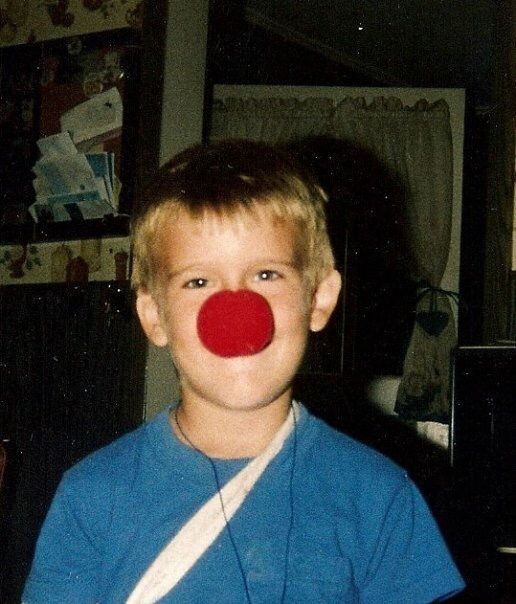
It wasn’t just the older kids who were starting to give me a hard time. There was a family with four kids who lived two doors down from us and they were some of my best friends at the time. It was widely known that their dad was a verbally and physically abusive asshole. I had heard him screaming at and hitting one of his boys on more than one occasion. He was a hyper masculine guy, always pushing his boys to play sports and berating them anytime he felt they weren’t acting like men. I was a sensitive kid and not into playing sports and I knew that he didn’t like me. I remember one time he stopped in front of our house, his station wagon full of kids and rolled down the window all to make fun of me for not playing sports as everyone laughed.
Growing up in a neighborhood with a lot of kids meant that there was often rough housing among the boys. I was always quite small for my age, and I had become accustomed to being on the losing end of these childhood battles until one day I had a bright idea. The asshole dad had recently bought his two older boys brand new Gary Fisher mountain bikes. Everyone thought they were the coolest. One day I decided to get back at the oldest boy who frequently gave me a hard time, and I strung clear fishing line between a couple of trees in the neighborhood. When he came riding through, he went flying over his handlebars and his precious bike got scratched up in the process.
For a moment I felt like I was the shit for having outsmarted this boy who was bigger and physically stronger than I was. Unfortunately, the moment was short lived, and I was hanging out with the kids who lived on the other side of our house when the asshole dad came barging in, screaming and fuming about what had just happened. He ran towards me and literally picked me up by my neck and slammed me against the wall while he screamed in my face. As soon as he left, I ran home and told my parents about it thinking that surely, they would address the asshole dad, but they never did. Our neighborhood was a little rough around the edges, and I know that my parents were doing the best they could with the tools and resources they had at the time, but to this day I cannot fathom any parents letting a grown adult physically assault their child and get away with it. Honestly, I think that my parents were just as afraid of this asshole as I was. This is one of my earliest memories of feeling unprotected by the adults who were supposed to protect me.
Once again, I didn’t give this incident much thought until I was in therapy in my thirties. As I got older, I grew accustomed to this kind behavior towards me. Even in my own family I would overhear the fights my parents would get into over my being different and my mom had to scold my grandpa on more than one occasion for teasing me. Fast forward to middle school where I began to face much bigger problems and let me introduce you to a new lifelong nemesis: the word “f*gg*t.”
I started to hear the F-word around fifth grade. I had no idea what it meant, but I could pick up from context clues that it wasn’t good to be one. Remember, this was a time when you couldn’t simply google things to figure them out. By the time I got to middle school, I knew what the word meant and I had started to hear myself referred to as a f*gg*t almost as often as my own name. Aside from the close friends who saw this firsthand, I didn’t talk about this much because I was so ashamed. I thought that it was my fault and that I deserved it because I was such a strange boy. While I was starting to realize I was probably gay, I was also sure that I could overcome it if I tried hard enough. For the next four years I was in basic survival mode.
I was bullied, made fun of, and even on occasion spit on during the bus to and from school. I was pushed into lockers between classes, and I rarely had an appetite at lunch because of the anxiety coursing through my body. While many were openly hostile towards me, others would whisper about me in class and in the hallways between classes. And on more than one occasion, a teacher would even join in and make a joke at my expense. Don’t even get me started on gym class which was a specific kind of hell and something I would find any excuse to get out of attending.
I don’t want to give off the impression that everything was bad. Throughout all these negative experiences, I always had good friends and family who loved me and there are just as many positive memories from my childhood. Things really turned around halfway through high school, and my last couple of years in the UP were genuinely pretty great. I eventually went off to college at Michigan State University where I had a truly idyllic experience, and I didn’t hear the F-word hurled in my direction for a very long time.
The point of this post isn’t to garner sympathy. It’s to highlight a little boy and how his journey to understand himself has been shaped by the cruelty around him. If you’re reading this as a non-member of the LGBTQ+ community, my hope is that you’ll ask yourself what real allyship looks like for you and how you might help the next little kid who needs someone to step in and protect them. Allyship is a verb and it’s so much more than wearing a tee shirt or sharing a performative post on social media. It requires continuous learning and the ability to confront discrimination and disinformation when you see it. How you choose to vote and spend your money has also never been more important.
While it is widely known that Pride started as a protest, for those outside the community it’s easy to forget the stories that hide behind the parades and celebrations. To me, what’s most remarkable about everything I just shared with you is how unoriginal my story really is. Unfortunately, you would hear similar stories from across the LGBTQ+ community and as the example I shared at the outset of this post demonstrates, it’s happening even in the most unsuspecting places today. And while it’s fantastic that the younger generations are coming out of the closet in the largest numbers we’ve ever seen, we also live under the political leadership of people who think it’s permissible to publicly shame and demonize us; to try to legislate us, especially the transgender community, out of existence. And so, in closing this is a simple reminder that we are here, and we are queer not just during Pride Month but 365 days a year.


Comments